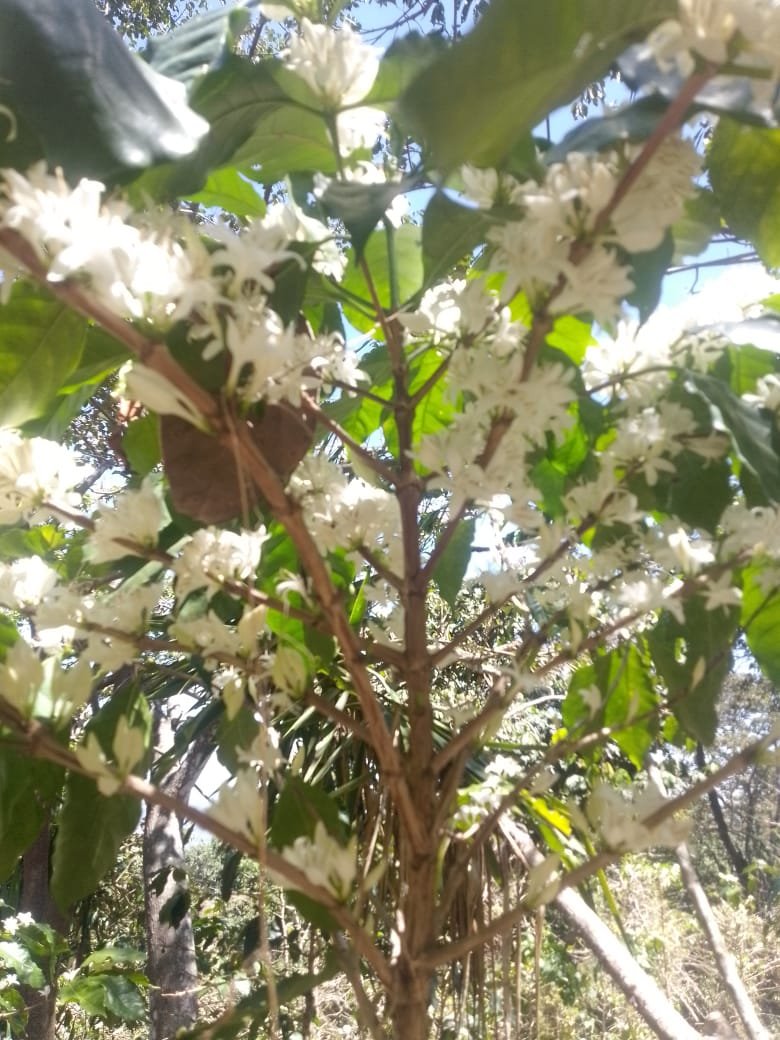
Coffee Flowering: When Coffee Trees Bloom and What It Means
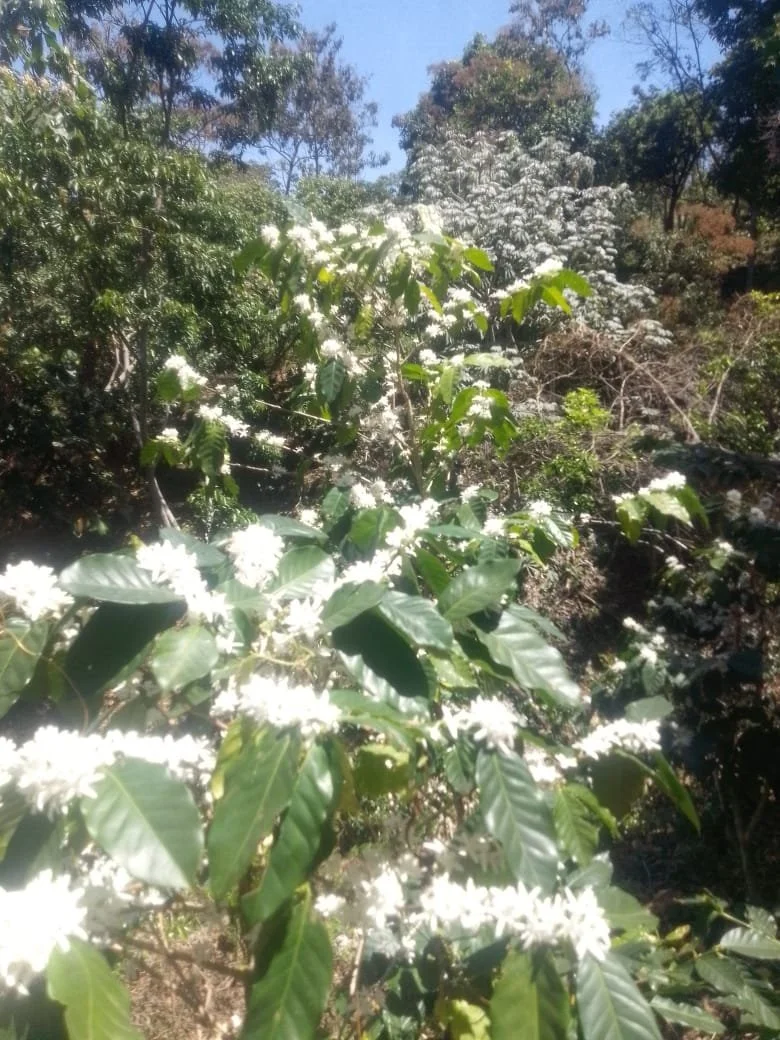
Coffee flowering is one of the most important stages in coffee production. Learn how it happens, how long it lasts, and what coffee plants need to produce fruit.
When the finca turns white, it means something special is happening 🌸
Coffee trees are blooming, and this short moment plays a key role in the next harvest.
At our family farm in Chinameca, El Salvador, this is one of the most beautiful and important times of the year.
How Does Coffee Flowering Happen?
Coffee flowering usually happens after the first rains of the season. And the whole finca smells like orange flowers. For me it was like a honey smell, when I was a kid.
The change in humidity and temperature triggers the plant to bloom.
After a dry period, rainfall acts as a signal for the coffee tree to start producing flowers.
How Long Does Coffee Flowering Last?
Coffee flowers are delicate and short-lived.
They usually last only a few days before they fall.
Even though this stage is brief, it is essential for the development of coffee cherries.
What Do Coffee Plants Need to Produce Fruit?
After flowering, coffee plants need the right conditions to develop healthy cherries:
consistent rainfall
stable temperatures
healthy soil
proper shade
If these conditions are met, the flowers will turn into coffee fruit over the following months.
How We Support Coffee Growth at Our Farm
At our finca, we focus on sustainable practices to support this process:
maintaining soil health
preserving shade trees
careful plant management
These practices help ensure that each coffee plant can grow strong and produce high-quality beans.
From Flower to Cup
Every cup of coffee begins here 🌸
What starts as a small white flower becomes the coffee you enjoy months later.
Understanding this process helps us appreciate the work behind every cup.
Fresh coffee from our finca is available in Canada ☕
👉 Order on the website:www.micajitaverdedecristal.com